Trump withdraws the 'tariff card' after framework agreement with NATO on Greenland
Jan 22, 2026
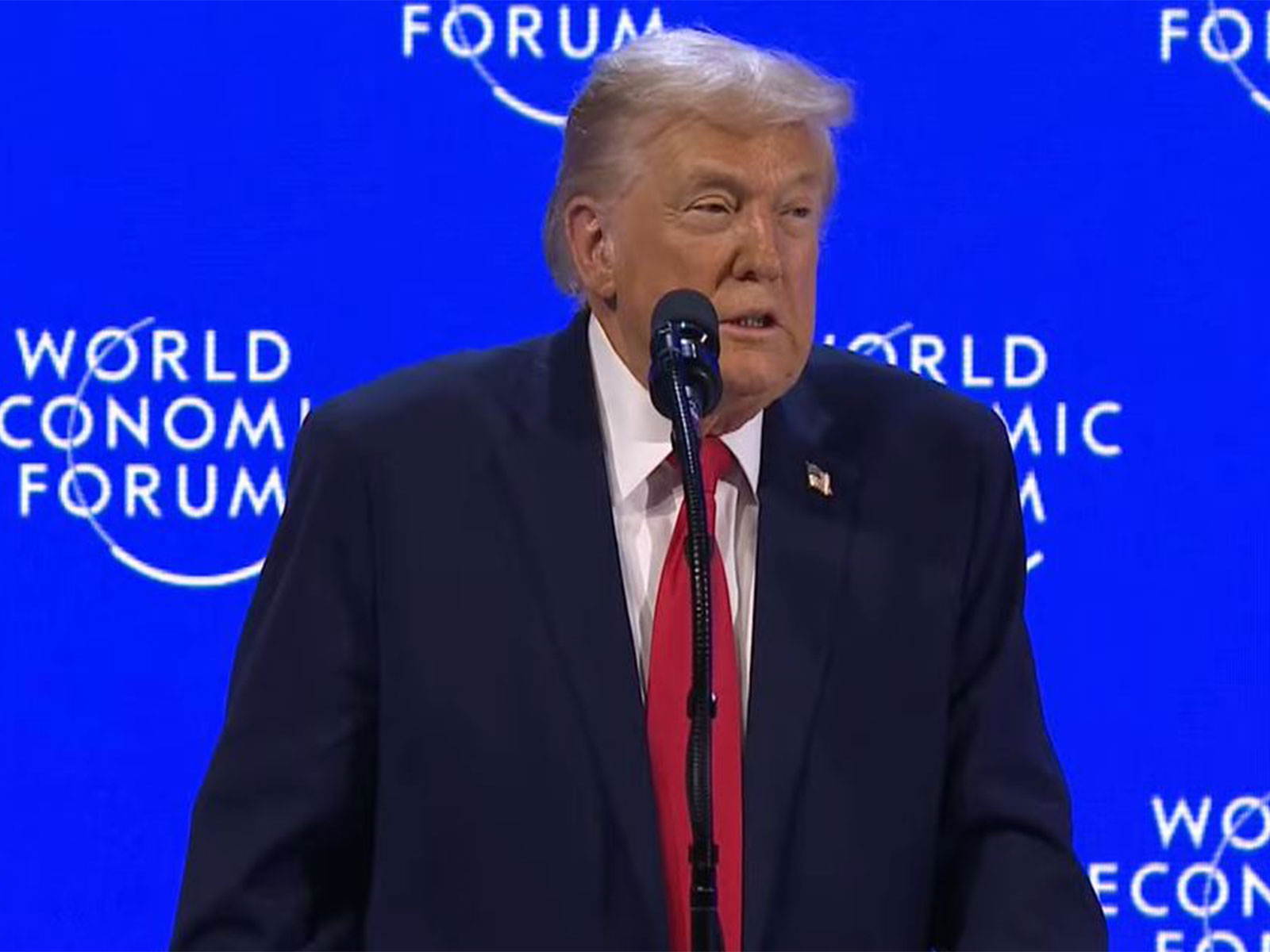
Washington [US], January 22: On January 21, US President Donald Trump announced he was withdrawing plans to impose tariffs on several countries over the Greenland issue, following a meeting with NATO Secretary General Mark Rutte on the sidelines of the World Economic Forum in Davos, Switzerland.
In a post on the social media platform Truth Social, Trump stated that he had reached "key points" of an agreement framework with NATO regarding the future of Greenland, which would not impose the tariffs scheduled to take effect on February 1st. However, he did not disclose details of the agreement.
Speaking in Davos, Trump said the U.S. had established a "step-by-step" negotiating framework regarding Greenland and Arctic security , in which tariffs would only be used if progress failed. He said negotiations on the missile defense system - part of which is based in Greenland - were still ongoing, according to The Guardian .
Trump also emphasized that the US would not use force to control Greenland but demanded "immediate negotiations."
NATO spokesperson Allison Hart confirmed that allies are discussing a cooperation framework to enhance Arctic security, while emphasizing the goal of preventing Russia and China from expanding their influence in Greenland.
"Negotiations between Denmark, Greenland, and the United States will continue to ensure that Russia and China never gain a foothold - economically or militarily - in Greenland," according to Allison Hart.
NATO Secretary General Mark Rutte described the meeting as "positive," but noted that much work remains to be done. Danish Foreign Minister Lars Løkke Rasmussen said that Trump had signaled he would not use force against Greenland, calling it a "positive message."
According to The New York Times , some NATO officials have discussed a scenario that would allow the U.S. to control small areas in Greenland, similar to the model of the British military base in Cyprus, but no official decision has been made.
President Trump's temporary pause on tariff threats helped global financial markets rebound strongly in trading on January 21. The S&P 500 closed up 1.2%, while the Dow Jones - which approached the 50,000-point mark for the first time - also rose 1.2%.
His concession on tariffs came just hours after the European Parliament indefinitely suspended ratification of the tariff agreement between the US and the European Union (EU), signed in the summer of 2025, a move that for the first time showed politicians were willing to confront Trump.
Source: Thanh Nein Newspaper